International Transfer Fees: What You Really Pay
Understand international transfer fees, exchange-rate markups, and receiving charges so you can compare the true cost of sending money from the U.S. confidently.
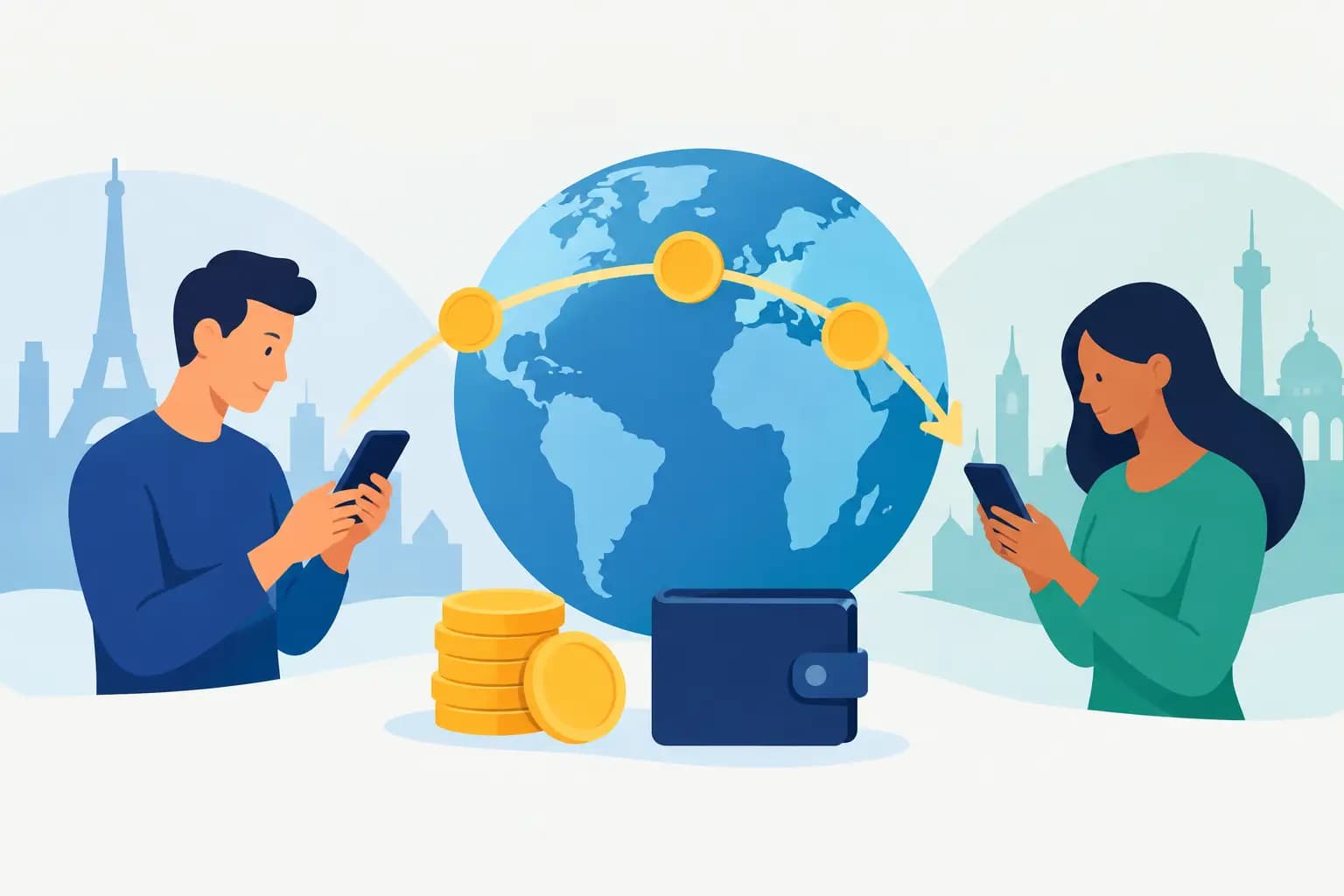
A $15 transfer fee can be the smallest part of what a family member receives. International transfer fees often sit beside a less visible cost: an exchange rate that gives you fewer pesos, rupees, naira, or other local currency units for each U.S. dollar. If you are sending money home from the United States, comparing the fee alone can lead you to choose the more expensive option.
For immigrants, students, and new U.S. workers, remittances are rarely a one-time financial task. They may support parents, cover a sibling's tuition, repay a personal loan, or help maintain expenses while you establish yourself in the United States. The right transfer method depends on the destination, how quickly the money is needed, how the recipient receives it, and the true amount that arrives.
What international transfer fees actually include
The advertised sending fee is the amount a provider charges you to initiate a transfer. It may be a flat dollar amount, a percentage of what you send, or zero. A zero-fee transfer is not automatically free. The provider still needs to earn revenue somehow, and that cost may be built into the exchange rate or charged to the recipient.
The total cost usually has three possible parts: the sending fee, the exchange-rate markup, and receiving or intermediary-bank charges. Not every transfer has all three, but you should check for each before sending.
An exchange-rate markup is the gap between the market exchange rate and the rate offered by the provider. Suppose the market rate is 83.00 Indian rupees per dollar, but a provider offers 81.50. On a $1,000 transfer, that difference means the recipient receives 1,500 fewer rupees before any separate fee is considered. A provider can advertise a $0 fee and still cost more than one charging a visible $8 fee with a better rate.
Receiving charges are more common with bank wires and certain payment arrangements. An intermediary bank may deduct a charge while the transfer is moving through its network. The receiving bank may also charge the recipient for an incoming international payment. These deductions can be difficult to predict when you send a wire using the standard SWIFT banking system.
Compare international transfer fees by delivery amount
The most useful number is not the fee shown at checkout. It is the exact amount the recipient will receive in their local currency.
Before confirming a transfer, compare the same dollar amount, destination country, funding method, and delivery method across providers. Then look at the recipient amount each service displays. This puts the fee and exchange rate in one place. If a service cannot tell you what the recipient should receive, treat that uncertainty as a cost, especially for a time-sensitive payment.
For example, imagine you are sending $500 from a U.S. checking account to a bank account abroad. Provider A charges $4.99 and offers an exchange rate that results in 40,500 units of local currency. Provider B charges no upfront fee but delivers 39,900 units. Provider A is the better financial choice, even though its listed fee is higher.
This comparison becomes even more important on recurring transfers. A difference of $10 per month is $120 over a year. For an H-1B worker managing rent, payroll deductions, and family obligations across two countries, that is money worth keeping track of.
The funding method can change the price
How you pay affects international transfer fees. Funding from a U.S. bank account is often cheaper than using a debit card, while credit card funding can be the most expensive option. A card issuer may treat the transaction as a cash advance, which can trigger a separate fee and interest charges. Do not assume that a card is cheaper simply because it is faster.
Bank-funded transfers may take longer to clear, particularly for a first transfer or a newly connected account. Debit cards can provide faster delivery but sometimes carry a higher provider fee. The practical choice depends on whether speed or total received amount matters more for that payment.
The delivery method matters too
Sending directly to a bank account is often less expensive than cash pickup, but it requires correct account details and a recipient who can receive local bank deposits. Cash pickup can be useful where banking access is limited or an emergency requires same-day access. Its convenience may justify a higher cost in some cases.
Mobile wallet delivery can be efficient in countries where wallets are widely used. But confirm that the recipient can cash out or spend the balance without a separate charge. A low-cost transfer is less useful if the recipient has to pay again to access the funds.
Why bank wires can cost more than expected
A traditional international wire can be appropriate for a large, documented payment, such as tuition, a property-related payment, or a transfer between your own accounts. Banks can provide records that may be helpful for personal documentation. But they are not always the lowest-cost choice for ordinary family remittances.
A U.S. bank may charge an outgoing wire fee, sometimes with a different price for online and in-branch requests. The exchange rate may include a markup, and intermediary institutions can deduct additional amounts. The recipient may receive less than you instructed, even if you selected an option that appears to cover fees.
Ask your bank whether the wire is sent in U.S. dollars or the recipient's local currency, whether intermediary deductions are possible, and whether it can state the expected delivered amount. Also verify the recipient bank's name, account number, routing format, and SWIFT or other required code. A correction after a wire is sent can be slow and may involve more fees.
Watch for limits, verification, and timing
Transfer cost is not the only factor. Providers may impose daily, monthly, or transaction limits. A new customer may have lower limits until identity verification is complete. Large transfers can trigger requests for identification, bank statements, proof of income, or an explanation of the purpose of funds.
These checks are normal parts of financial crime prevention rules. They do not mean you did something wrong. Still, they can delay a transfer, so avoid waiting until the last day of a tuition deadline or medical expense to send a large amount.
Transfer timing also affects the exchange rate you receive. Rates move throughout the day, and weekends or holidays can slow bank processing. If the recipient needs a predictable amount, compare providers shortly before sending and save the confirmation showing the rate, fee, transfer ID, and expected delivery date.
Keep records when you send money abroad
Save transfer confirmations, bank statements, and any messages about canceled or refunded transactions. These records help you trace a missing payment, establish where funds came from, and reconcile your own budget.
For most people, sending a gift or family support payment abroad is not itself a deductible expense on a U.S. tax return. Tax treatment can become more complicated when transfers relate to business activity, foreign accounts, property purchases, investments, or large gifts. If your transfer is part of one of those situations, get advice that fits the facts rather than relying on a remittance app's general guidance.
Also be careful about account names. A transfer can be delayed or rejected if the recipient name does not match the bank or wallet account. This is particularly common when someone uses a nickname, has multiple surnames, or recently changed their legal name.
A simple routine before you send
Use the same routine each time: choose the exact amount you want to send, compare the recipient amount across at least two options, check how the recipient will access the funds, and review the final screen before payment. If the transfer is recurring, repeat the comparison occasionally. A provider that was cheapest six months ago may not be cheapest today.
SettleinUS's remittance fee comparison calculator can help organize this check without requiring an account. But the final screen from the provider remains the number that controls your specific transaction, because rates and fees can change by payment method, destination, and time of day.
The goal is not to find one provider that is always best. It is to make each transfer with clear eyes: know the dollars leaving your account, the local currency arriving for your recipient, and the trade-off you are making for speed, convenience, or certainty.