How to Open an Account Without Credit in the U.S.
Learn how to open an account without credit in the U.S., which documents banks accept, how visa status matters, and when to choose a credit union instead.
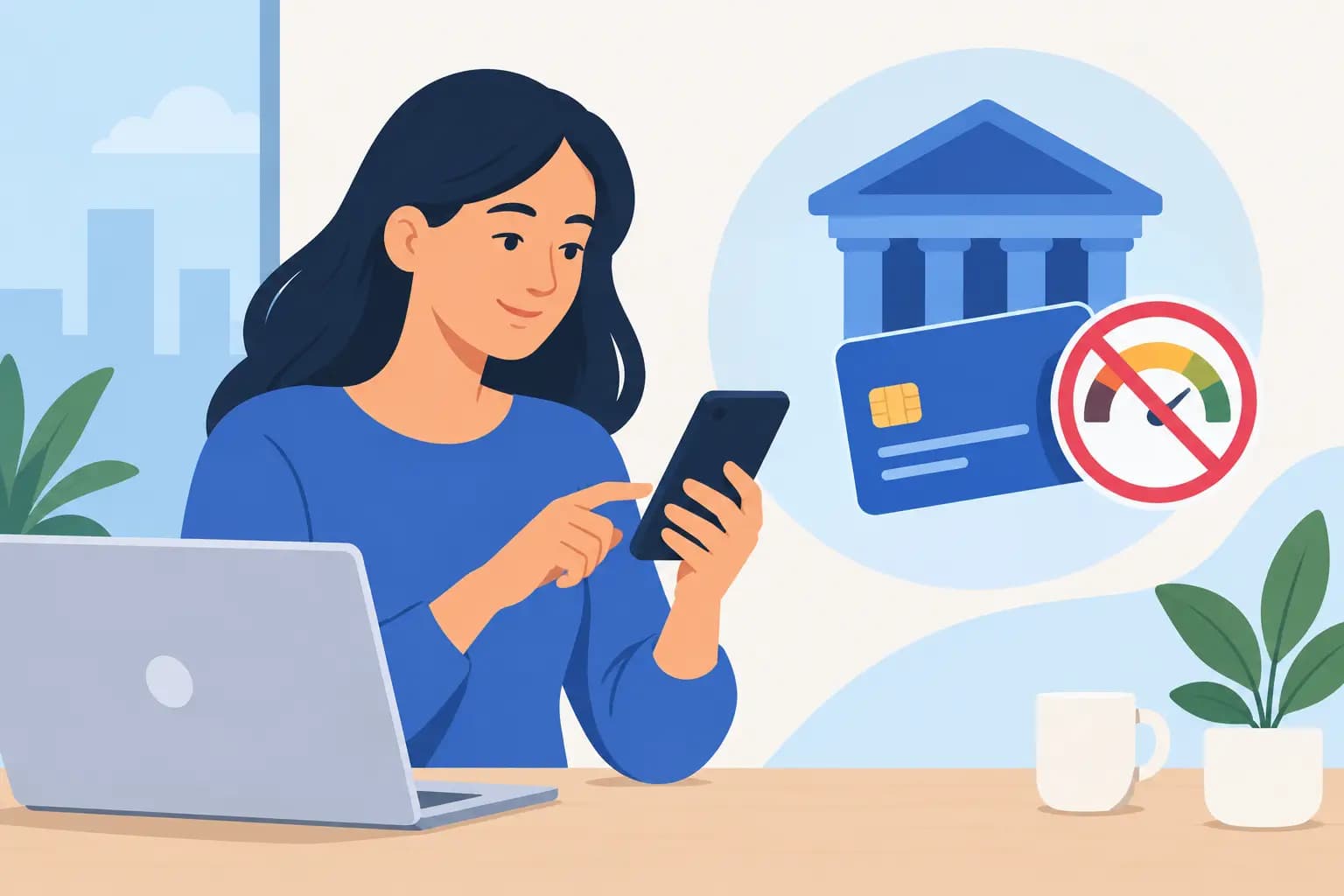
A U.S. credit score can take months to build, but you should not have to wait months to receive your paycheck, pay rent, or keep your money safely. The good news is that most newcomers can open an account without credit. A checking or savings account is generally based on identity verification, not your credit score.
That distinction matters because U.S. banking uses several systems that can sound similar but do different jobs. A bank account lets you hold and move money. Credit allows you to borrow money. You can usually start with the first before you qualify for the second.
What “without credit” means at a U.S. bank
For a standard checking or savings account, a bank usually does not pull the same credit report used for a credit card, auto loan, or apartment application. Having no U.S. credit history is common for people arriving on an H-1B, F-1, J-1, L-1, TN, or green card status. By itself, it should not prevent you from opening a basic deposit account.
Banks still need to verify who you are. Federal customer-identification rules require financial institutions to collect identifying information before opening an account. Each bank also has its own risk rules, document standards, minimum-opening-deposit rules, and account fees.
There is one issue worth separating from credit: deposit-account screening. Some institutions review reports from specialty consumer-reporting companies, such as ChexSystems, to see whether an applicant has had unpaid negative balances or accounts closed for suspected fraud. A thin or nonexistent credit file is different from a negative banking-history report. If you are new to the country, you may have neither - which is usually a much simpler situation.
Documents to bring when you open an account without credit
Requirements vary, but arriving prepared avoids a frustrating second trip. A bank will commonly ask for a government-issued photo ID, your date of birth, a U.S. residential address, and a tax identification number if you have one.
For many immigrants, a valid passport is the primary photo ID. The bank may also ask for an immigration document that supports your current U.S. presence, such as an I-94 record, visa, Employment Authorization Document, Form I-20, or Form DS-2019. Do not assume every branch employee knows the details of your status. Bring the documents that clearly establish your identity and current address, even if the bank ultimately needs only some of them.
An SSN is useful, but it is not the only possible tax identifier. People who are not eligible for an SSN may be able to use an Individual Taxpayer Identification Number, or ITIN, at institutions that accept it. Some banks can open certain accounts for applicants without either number, but their policies differ. Ask before visiting rather than relying on a general statement from a friend or social-media post.
Proof of address is often the hardest document for someone who has just landed. Depending on the institution, a lease, utility bill, official school letter, employer letter, or other mailed document may work. A hotel address, short-term rental, or employer-provided housing can create extra questions. If you do not yet have permanent housing, call the bank and ask what it accepts for your specific situation.
You may also need money for the opening deposit. Some accounts allow a very small opening amount, while others require more or charge a monthly fee until you meet a balance threshold. Read the fee schedule before you submit an application. A no-monthly-fee account with a modest starting deposit can be more valuable than a premium account you do not yet need.
A practical way to choose your first account
Your first U.S. account does not need every feature. It needs to work reliably for your first 90 days: receiving income, paying bills, withdrawing cash, sending money to trusted people, and keeping fees predictable.
Start by deciding whether you need a checking account, a savings account, or both. Checking is the everyday transaction account. It is usually where direct deposit arrives and where you pay rent, use a debit card, or send electronic payments. Savings is better for money you do not plan to spend immediately, though transfer limits and account terms can apply.
Then compare the details that affect a newcomer most:
- Monthly maintenance fee and exactly how to waive it
- Minimum balance and opening-deposit requirements
- Direct-deposit availability and timing
- ATM network access and out-of-network ATM charges
- International wire or remittance options and their total cost
- Whether the bank supports online applications with your documents
- Deposit insurance coverage and account ownership rules
A large national bank may offer widespread branches and ATMs, which can help if you are moving between cities for work or school. A local credit union may offer lower fees and more personal service, but membership rules can apply. Online banks can be convenient and inexpensive, yet they may be less useful if you regularly need to deposit cash or want face-to-face help with documents.
There is no universal best choice. An F-1 student living near campus may value a nearby branch and fee-free ATM access. An H-1B worker paid by direct deposit may prioritize a low-fee digital account and efficient transfers. A family relocating permanently may want a bank with branches near home, work, and future travel destinations.
How visa status affects the process
Your immigration status can influence the documents you have, your work authorization, and your tax identification options. It does not usually create a rule that says a particular visa holder cannot open a bank account.
For example, an H-1B or L-1 worker often has an SSN after beginning authorized employment, while an F-1 student may receive an SSN only after becoming eligible through qualifying employment. A person without SSN eligibility may seek an ITIN for tax purposes, but an ITIN application has its own rules and timeline. Do not apply for an SSN merely because a bank form asks for one if you are not eligible for it.
Use accurate information on every application. Your name should match your passport and immigration records as closely as possible. If your apartment lease uses a shortened name but your passport has multiple given names, be ready to explain the difference. Small inconsistencies can delay identity verification.
Also ask how the institution handles an expired visa stamp versus your current immigration status. A visa stamp is generally used to request entry to the United States, while your I-94 and underlying status documents help show your authorized stay after entry. Bank employees are not immigration officers, but clear documentation can prevent confusion.
What to do if the bank declines your application
A denial is not always a statement about your credit. It may result from an address-verification problem, an incomplete document, an internal policy, a mismatch in your personal information, or a specialty banking report.
Ask for the specific reason, politely and in writing if possible. If the institution used a consumer report to make its decision, it generally must provide an adverse-action notice identifying the reporting company. You can request a copy of that report and dispute inaccurate information. If you simply do not meet that bank’s documentation policy, another bank or credit union may have a process that fits your documents better.
Avoid repeatedly applying without understanding the problem. Instead, confirm which identification documents are accepted, whether an in-person appointment is required, and whether the institution accepts your SSN, ITIN, or current documentation. A branch visit can be more productive than an online application when your situation is not standard.
Your first account is not your first credit product
A checking account can make it easier to establish financial routines, but it does not normally build a credit score by itself. Debit-card purchases, direct deposit, and paying rent from checking do not automatically appear on major credit reports.
After your account is open and funded, you can consider credit-building options separately. A secured credit card, for example, requires a refundable security deposit and may report on-time payments to credit bureaus. The key is to confirm that the issuer reports to the major bureaus, keep the balance low relative to the limit, and pay the statement balance on time. Never carry interest just to build credit.
Opening a bank account first is still a meaningful step. It gives you a safer place for income, a record of your own transactions, and a way to handle the practical demands of a new life in the United States. Bring the right documents, compare fees before you commit, and treat any request you do not understand as something worth asking about before you sign.